In this glossary are all the concepts previously seen in The Module of Architectural Analysis II.
A horizontal mortar joints
Tend to catch the light and give the brickwork a neat, ordered appearance.
Example: Joints on the slabs of pavements or concrete floors and on the walls of buildings.
en: Juntas de mortero horizontales
Air-entrained concrete
Noun
Produced using air-entraining admixtures when the concrete is batched. The amount of entrained air is usually between four and seven percent of the volume of the concrete but may be varied as required by special conditions.
Example: is produced using air-entraining portland cement, or by the introduction of air-entraining agents, under careful engineering supervision, as the concrete is mixed on the job.
en: Hormigón arrastrado por aire
Architectural concrete
Noun
Has a very specific meaning in the specifications. Specifications will have requirements about appearance and finish for architectural concrete that differ from structural concrete. Structural concrete is often covered, hidden, or below the ground, while architectural concrete is exposed or visible and needs to look nice.
Example: The flexibility of architectural concrete in design enables the designer to create structures not possible with other construction materials.
en: Concreto arquitectónico
Asphaltic concrete
Noun
Asphaltic concrete is a fancy word for “Asphalt”. Try to say “asphalt” instead because it’s more commonly understood. Cellular concrete has lots of tiny air bubbles in it. It is commonly used on flat roofs to achieve a slope because it is light and has insulating properties.
Example: s typically used only in engineering and construction documents, which define concrete as any composite material composed of mineral aggregate adhered with a binder.
en: Concreto asfáltico
Axis
Noun
A line connecting two points in space, about which forms can be arranged in an asymmetrical or symmetrical, balanced manner.
Example: A city street
en: Eje
Backup wall
Are cold-formed steel framed walls with water-resistant sheathing and concrete masonry.
Example: Drained gravel
en: Muro de respaldo
Brick courses
Is a layer of the same unit running horizontally in a wall.
Example: Stretcher bond
en: Curso o trayectoria del ladrillo
Cellular concrete
Noun
Is a special engineered concrete manufactured by mixing Portland cement, sand, fly ash, water and pre-formed foam in varied proportions to form a hardened material having an oven-dry density of 50 pounds per cubic foot (PCF) or less.
Example: is utilized as thermal insulation in the form of bricks and blocks over flat roofs or non-loading walls. Bulk filling by applying relatively low strength material for old sewer pipes, wells, unused cellars and basements, storage tanks, tunnels and subways.
en: Concreto celular
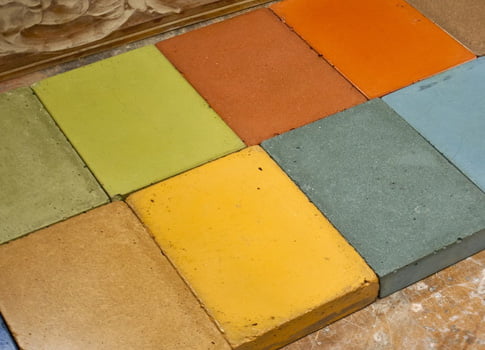
Colored concrete
Noun
Simply means it has an integral color (added to the mix), or has a color or stain added to the surface.
Example: it can be used to create unique designs, break up large paved areas, or hide potential stains.
en: Cemento pintado
Concrete block
Noun
Is a prefabricated masonry, made with fine concrete or cement mortars, used in the construction of walls.
Example: when built with integral steel reinforcement, is a very common building material for the load-bearing walls of buildings.
en: Bloque de concreto
Cured concrete
Noun
Providing adequate moisture, temperature, and time to allow the concrete to achieve the desired properties for its intended use.
Example: means maintaining a relative humidity in the concrete of greater than 80 percent, a temperature greater than 50 degrees Fahrenheit, and for a time typically ranging from three to 14 days depending on the specific application.
en: Concreto curado
Dovetail inserts
Noted for their resilience to pull apart, these finger-like joints between two pieces of wood enable a tight, strong, and long lasting fit. Dovetail joints are a sign of a true craftsman.
Example: Through Dovetail
en: Insercciones de cola de milano
Edge
Noun
The outside limit of an object, area or surface; a place or part farthest away from the center of something.
Example: Beaches and railway crossings
en: Borde
Exposed concrete
Noun
The concrete is visible. Structural concrete is usually not exposed (visible): it is covered by exterior and interior finish materials. Designers will often pay attention to whether concrete is exposed and will set standards for the appearance and finish.
Example: ideal for use in outdoor areas, the more heavily exposed finish is perfect for driveways or areas requiring more grip.
en: Concreto aparente
Gravity load
Is the vertical forces that act on a structure.
Example: Building loads
en: Carga de gravedad
Green concrete
Noun
Refers to fresh concrete that is uncured or isn't strong yet. It also means concrete that is made from recycled stone or has other eco-friendly materials or properties.
Example: it requires less maintenance and repairs, and it can be used in all parts of the structure.
en: Concreto verde
Hanging off (of)
Verbo
To be suspended from something.
Example: The Sustainable architecture
en: Colgando
Insulating concrete
Noun
Similar to cellular concrete, except it uses perlite or lightweight foam aggregate.
Example: Common applications for the insulating concrete of construction are low-rise buildings, with property uses ranging from residential to commercial to industrial.
en: Concreto aislante
Ladder-type systems
Noun
stone anchoring system for cavity or insulated walls. The backup is reinforced with a ladder type reinforcement with projecting boxes and a factory-welded restraint bar.
Example: is ideal for when horizontal mortar joints do not align, and a large amount of vertical adjustability is required.
en: Sistemas tipo escalera
Landmark
Noun
Any natural or man-made structure that are recognized by the public of a particular place or city.
Example: The Golden Gate Bridge
en: Hito
Laterally
Adverb
At, toward, or from the side or sides; sideways.
Example: Lateral Loads
en: Lateralmente
Masonry ties
Noun
Wall ties, sometimes called 'brick ties', are used in buildings with cavity walls.
Example: Used to join the two leaves of a cavity wall together, allowing the two parts to act as a homogeneous unit.
en: Lazos de albañilerìa
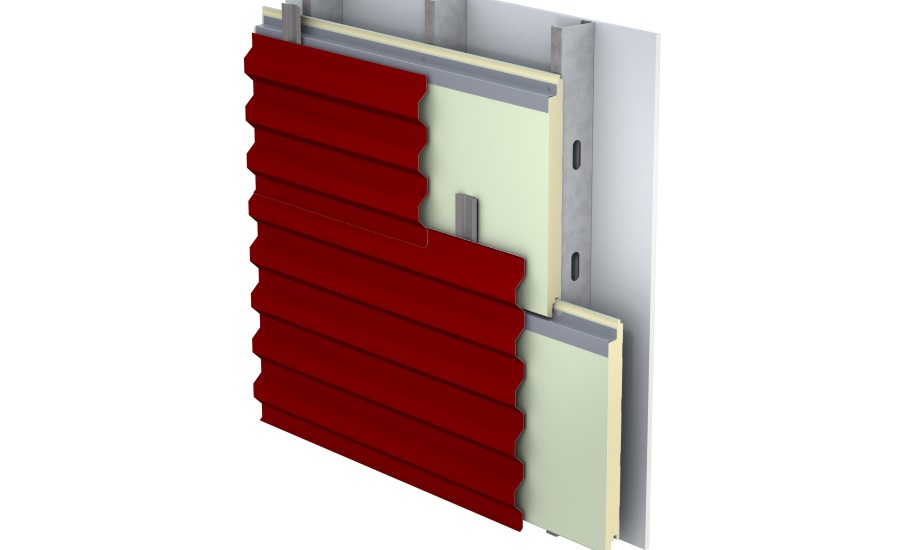
Meta panel
Noun
Is a general term describing any flat, thin sheet of metal. It can be any type of metal (stainless steel, aluminum, titanium, etc.)
Example: Insulated metal panels (IMPs) are exterior wall and roof panels with steel skins and an insulating foam core.
en: Panel metálico
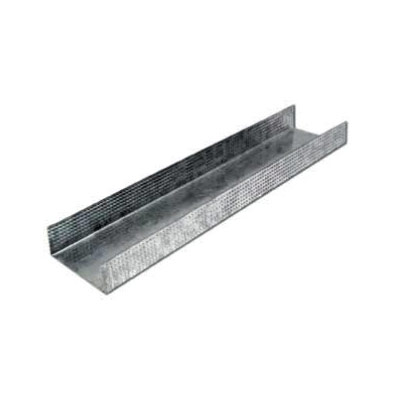
Metal channel
Noun
Metal channels are light gauge and cold formed. Light gauge means thin. Cold formed means that they are made by bending thin steel without heating.
Example: We carry "U" channel metals in aluminum, brass, carbon steel, and stainless steel.
en: Canal metálico
Metal decking
Noun
Is corrugated metal sheeting that’s used as a structural roof deck or composite floor deck. It will be supported by steel beams or joists. The purpose of metal deck is to support the insulating membrane of a roof or to support and bond with the concrete to create a composite metal floor deck.
Example: We are often asked what is the maximum span for metal decking – in fact it’s one of the most common queries
en: Cubierta metálica
Metal framing
Noun
Usually refers to cold-formed, light gauge studs, channels and other shapes. Metal framing can be structural if it is engineered.
Example: Designs and manufactures a comprehensive range of metal framing components for use with our wall and ceiling systems.
en: Enmarcado metálico
Metal grating
Noun
Grating can be structural or non-structural. metal grating, is an open grid assembly of metal bars, in which the bearing bars, running in one direction, are spaced by rigid attachment to cross bars running perpendicular to them or by bent connecting bars extending between them, which is designed to hold heavy loads with minimal weight.
Example: It can be made of materials such as steel, aluminum, fiberglass. Fiberglass grating is also known as FRP grating.
en: Rejilla metálica
Metal rod
Noun
Are metals and alloys designed in the pattern of round bars or rod, rectangular or flat bars, square bars, hexagons, and other patterns of bar stock. These shapes also come in billet form and generally include a cross-section based on the shape of rod or bar stock.
Example: Reinforcing bars are also a type of metal rods that are used to give strength or internally sustain the concrete and masonry structures.
en: Varilla metálica
Metal roofing
Noun
Is simply a roofing system made using metal pieces, tiles, or panels. A metal roof is a part of the roofing envelope which is the physical separator between the inside and outside of the building and is designed to provide resistance to air, water, heat and sound.
Example: Metal can be used as a roof covering in several different ways. The main forms are based on sheet-like panels, which may be flat or profiled, and either prefabricated, or formed on site, but metal can also be used to create shingles - formed into shapes similar to tiles, shakes or slates.
en: Tejados metálicos
Metal stud
Noun
Structural metal stud framing refers to the construction of walls and planes using cold-formed steel components. There are two main components of metal stud framing, a stud and a track. Heavier gauge metal studs are used in load bearing walls and structural applications such as exterior walls. Lighter gauge metal studs are used in non-load bearing applications such as some interior walls, half-walls, and partitions.
Example: Steel studs are perfectly straight. They don't shrink or split
en: Perfilería metálica
Metal tubing
Noun
Is made of metallic elements or alloys and is designed for specific industrial applications. Compared to other types of tubing, metal tube is stronger and most robust, making it better suited for structural applications and high-pressure fluid flow.
Example: We carry square metal tubing in aluminum, brass, carbon steel, and stainless steel. Square metal tube stock is used in both structural and architectural.
en: Tubo metálico
Multistory
Noun
A multistorey building has several floors
Example: Hotels, a car park.
en: Varios pisos
Node
Noun
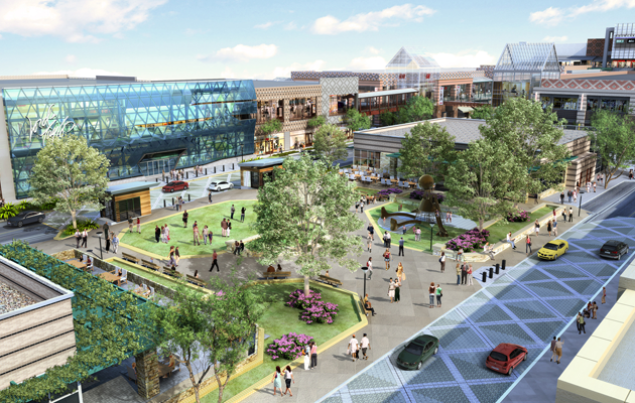
Central or connecting points in a neighborhood that has a mix of residential, commercial and institutional building.
Example: Shopping areas, community centers, libraries and medium to high density housing.
en: Nodo
Plot
Noun
It is established through constant reference points and lines located in space, and even if they change in size, shape or function, they can share a common relationship since this is created by establishing a regular scheme of points that define intersections.
Example: it can be seen in the intersections of the lines that are created in the streets of the neighborhood blocks.
en: Trama
Porous concrete
Noun
‘Porous’ describes a material that has ‘pores. Pores are tiny spaces or voids in a material. A porous material allows water to pass through. Cotton, bread, loamy soil, and paper are all porous materials. Porous concrete is also called ‘pervious’ concrete’ or ‘permeable concrete’. It’s a popular way to reduce storm water runoff and helps save the planet.
Example: traditionally used in parking areas, areas with light traffic, residential streets, pedestrian walkways, and greenhouses.
en: Concreto poroso
Precast concrete
Noun
Is a construction product produced by casting concrete in a reusable mold or "form" which is then cured in a controlled environment, transported to the construction site and lifted into place
Example: is used within exterior and interior walls.
en: Concreto prefabricado
prestressed concrete
Noun
is a form of concrete where initial compression is given in the concrete before applying the external load so that stress from external loads are counteracted in the desired way during the service period.
Example: is used in a wide range of building and civil structures where its improved performance can allow for longer spans, reduced structural thicknesses, and material savings compared with simple reinforced concrete.
en: Hormigón pretensado
Reinforced concrete
Noun
Concrete in which wire mesh or steel bars are embedded to increase its tensile strength.
Example: is used in structures as castles, columns, slabs, etc.
en: Concreto reforzado
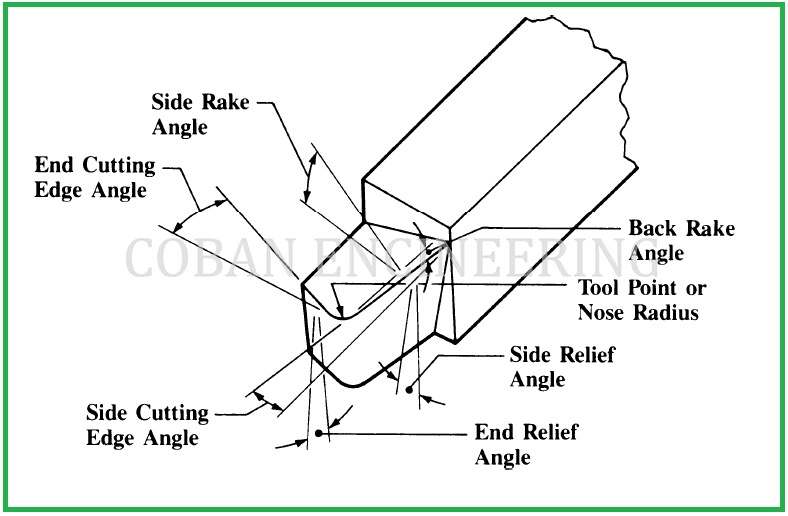
Relief angle
Noun
A structural steel member that relieves the weight of another system constructed within the building.
Example: normally relate to masonry brick, stone, or other types of cladding that have significant weight to their systems.
en: Àngulo de alivio, rebajo o incidencia
Steel angle
Noun
Steel angles are hot rolled, and are most often structural.
Example: Plain Steel Angle with 1/8 in. Get free shipping on qualified Steel Angles products or Buy Online Pick Up in Store today in the Hardware Department.
en: Ángulo de acero
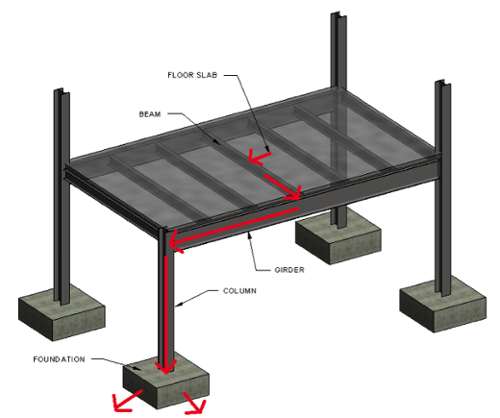
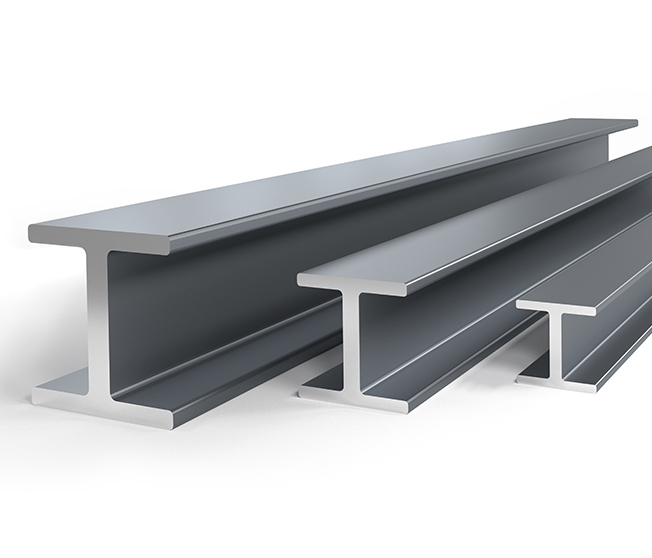
Steel beam
Noun
Is a structural steel product that is made to support heavy loads.
Example: The specifications of a structure determine the geometry, size and shape of beams. These beams can be straight or curved.
en: Viga de acero
Steel column
Noun
Is a vertical structure member used in construction to provide essential support.
Example: They may carry loads in compression or they may transfer loads from things like beams, ceilings, floor slabs or roof slabs to floors or foundations.
en: Columna de acero
Steel framing
Noun
Typically refers to a building technique with a “skeleton frame” of vertical steel columns and horizontal I-beams, created in an exceedingly rectangular grid to support the floors, roof and walls of a building that are all hooked up to the frame. The event of this system created the development of the building possible.
Example: Designs and manufactures a comprehensive range of metal framing components for use with our wall and ceiling systems.
en: Estructura de acero
Steel joist
Noun
Are open web lightweight steel trusses consisting of parallel chords and a triangulated web system, proportioned to span between bearing points. There are five main components: a top chord, bottom chord, end web, bearing seat, and interior web members.
Example: Steel joist framing provides an efficient framing system for supporting floors and ceilings in a wide variety of building types.
en: Vigueta de acero
Steel member
Noun
Are any part of a primary structural system. Beams, columns, girts, joists, etc.
Example: This article describes the verification of steel members subject to shear, bending moments and axial forces.
en: Miembro de acero
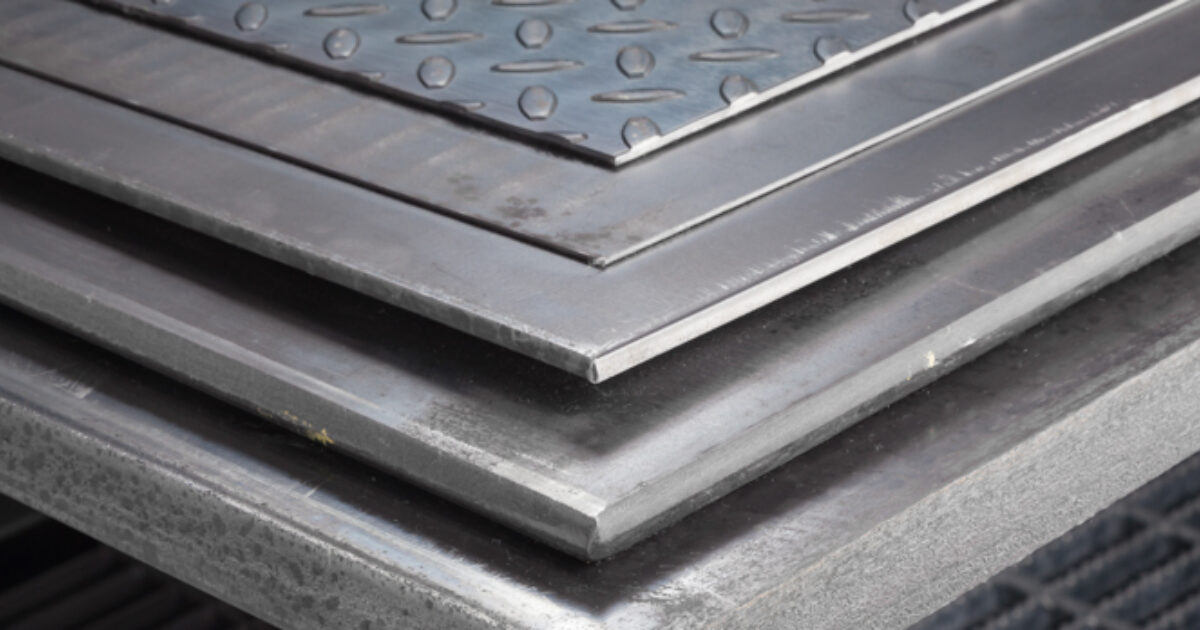
Steel plate
Noun
Is simply steel sheet material that can be customarily cut and welded to develop a more elaborate product. It is made by compressing multiple steel layers together into one; forming a plate of steel.
Example: Steel Plate product range provides the ability for our customers to select the steels that best suit their specific design criteria.
en: Placa de acero
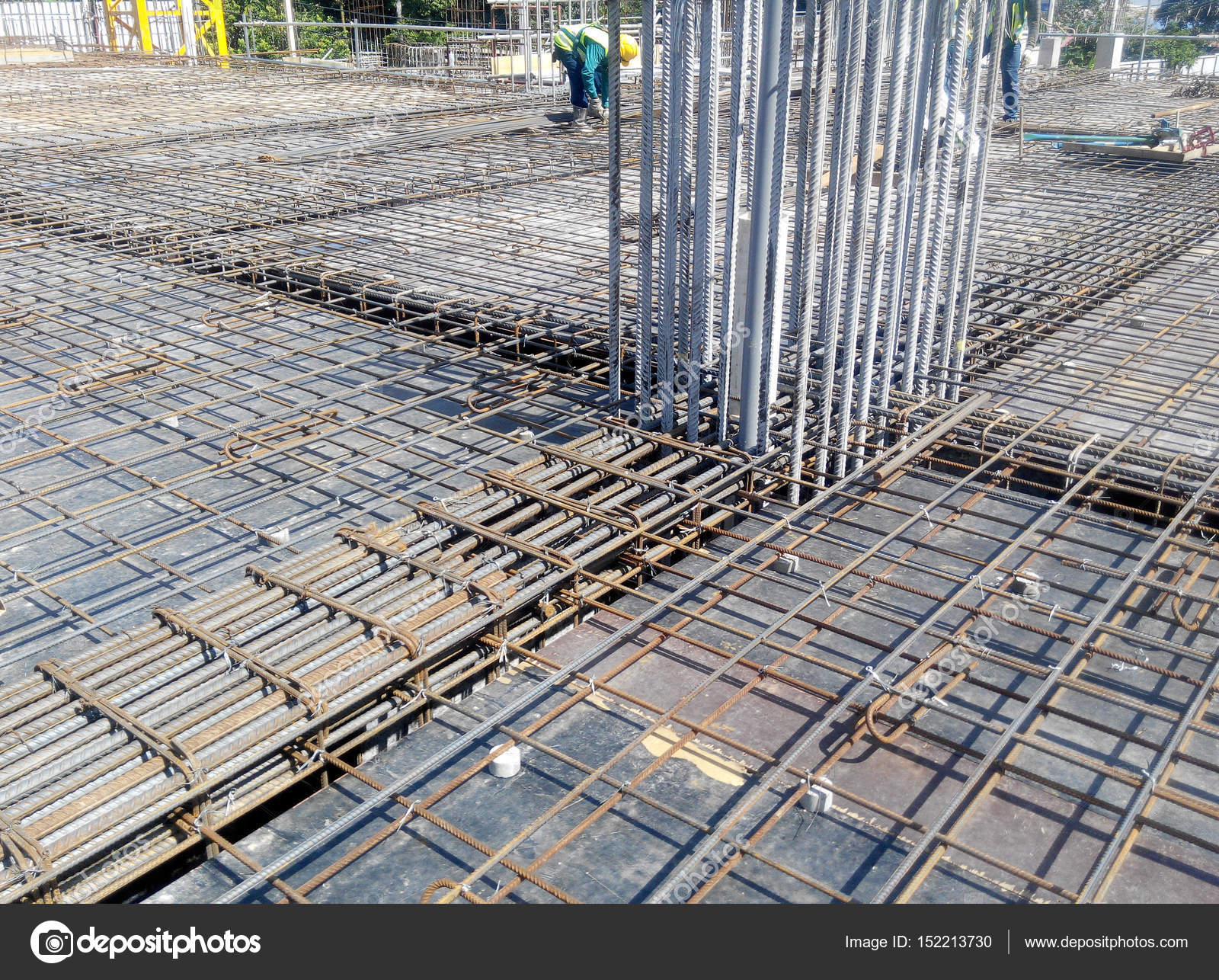
Steel reinforcement
Noun
Is a steel bar or work of steel wires utilized as a tension device in reinforced concrete and reinforced masonry structures to fortify and help the solid under strain.
Example: Steel Reinforcement is in the form of rebar or wire of steel, which is utilized in concrete members to resist primarily tensile forces.
en: Refuerzo de acero
Steel reinforcing
Noun
Are steel bars that are provided in combination with plain cement concrete to make it reinforced concrete. Hence these structures form steel reinforced cement concrete structure (R.C.C). Steel reinforcement is commonly called as ‘rebars’.
Example: Is in the form of rebar or wire of steel, which is utilized in concrete members to resist primarily tensile forces
en: Refuerzo de acero
Steel rod
Noun
Metal rods are specially formed pieces of metal and alloy that are shaped into a rod-like aesthetic hence the name. Metal rods are commonly used to give added support to a range of applications such as masonry structures.
Example: Metal rods alloys designed in the pattern of round bars or rod, rectangular or flat bars, square bars, hexagons, and other patterns of bar.
en: Varilla de acero
Steel sections
Noun
Describes the profile or shape of a structural steel member. Engineers use the section properties for their calculations.
Example: steel sections are suitable for use in a range of sectors and have been used to build tools, vehicles, walkways, bridges, buildings and more.
en: Secciones de acero
Supports
Noun
is a part of a building or structure that provides the necessary stiffness and strength in order to resist the internal forces and guide them safely to the ground.
Example: It can be made of wood, stone, plaster, metal, or other media.
en: Apoyos
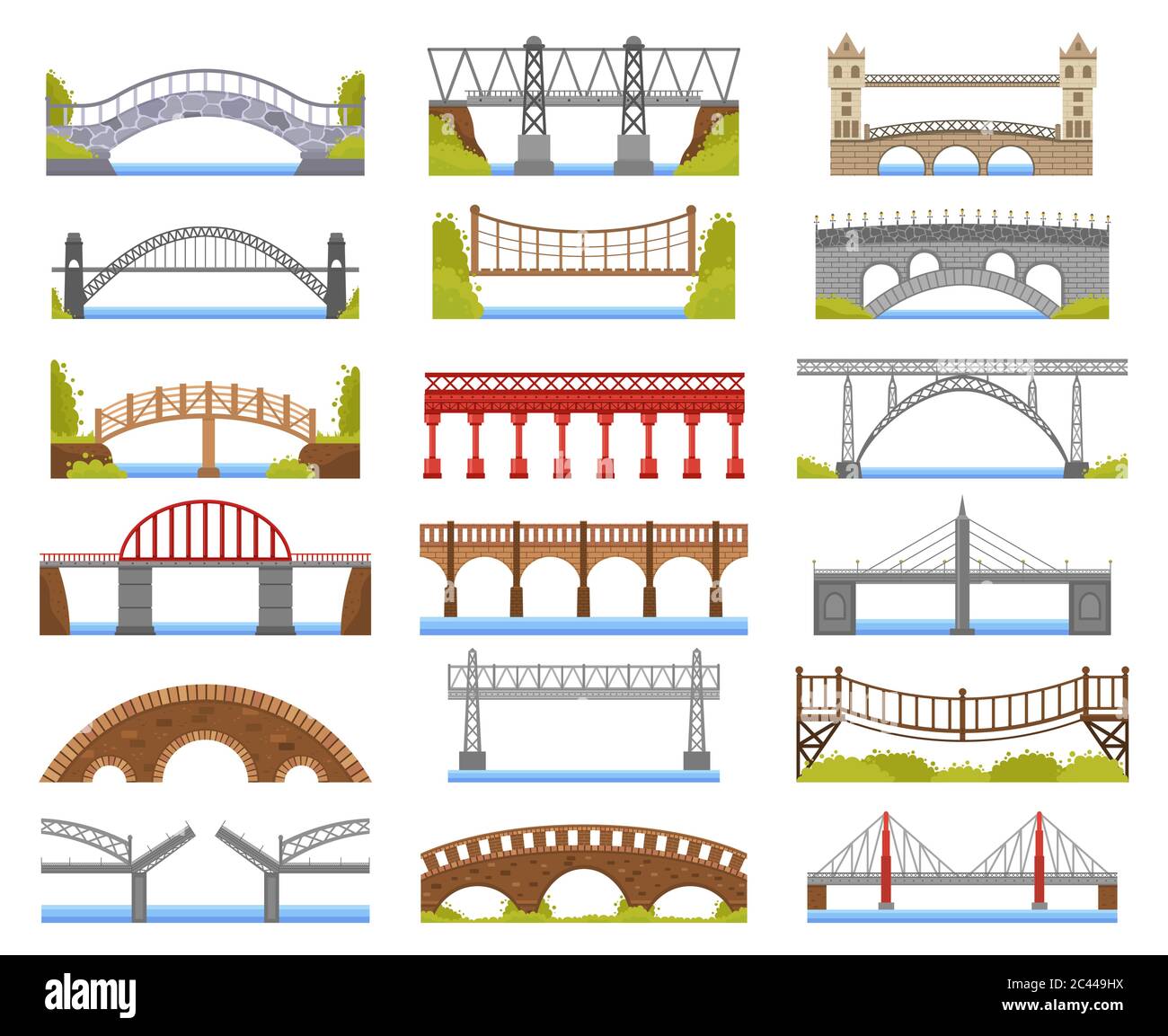
Tie (something) back to
Verb
Example: suspension bridges
en: Atar (algo) a
Trajectory and movement
Noun
Movement of people through, around and between buildings and other parts of the built environment.
Example: Circulation spaces (lobbies, stairs)
en: Trayectoria y circulaciòn
Transfers
Verb
Those that transfer the loads of the structure to the ground
Example: Slabs
en: Transferencia
Unreinforced concrete
Noun
Uncured slabs of concrete will likely develop a pattern of fine cracks, and will not be strong enough to withstand years of weather and use.
Example: When concrete is not cured, its durability, strength and abrasive resistance are affected, concrete develops plastic shrinkage cracks, thermal cracks, along with a considerable loss in the strength of the surface layer.
en: Concreto sin curar
Urban Legibility
Noun
The possibility of organizing an environment within an image able and coherent pattern.
Example: A city
en: Legibilidad Urbana
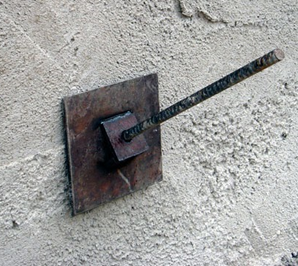
Wedge anchor
Noun
A generic term for a type of anchor used to fasten a variety of materials to concrete.
Example: Integrated in a rock slope or in certain parts of a work (walls, fundation slabs, etc.)
























.jpg/440px-Bracket2_(PSF).jpg)